
BEONWEB Insights
BlogE-commerce

How to Sell Online in Cameroon in 2026: A Complete Guide to Getting Started

Everything you need to know to start selling online in Cameroon: platforms, Mobile Money payments, customer acquisition, and delivery management.

BEONWEB Editorial Team1 April 202612 min
How to Sell Online in Cameroon in 2026: A Complete Guide to Getting Started

Online commerce in Cameroon is experiencing spectacular growth. With more than 10 million internet users and a mobile penetration rate exceeding 85%, the market is ripe for entrepreneurs who want to sell online. Yet many dive in without a clear strategy and give up after a few weeks. This comprehensive guide gives you all the keys to start, structure, and grow your e-commerce business in Cameroon in 2026.

1. Online Selling Models Suited to Cameroon

Before launching, it is essential to choose the right sales model. In Cameroon, four approaches dominate the market, each with its own advantages and constraints.

The independent e-commerce store

Creating your own e-commerce site gives you total control over your brand image, your prices, and your customer relationships. Solutions like WooCommerce (on WordPress), Shopify, or PrestaShop allow you to launch a professional store in just a few days. This is the ideal model if you want to build a lasting brand and retain your customers over the long term.

Initial investment: between 150,000 and 500,000 FCFA depending on features. Key advantage: you own your audience and your customer data.

Local and international marketplaces

Marketplaces allow you to sell without creating your own site. In Cameroon, several platforms are active: Jumia Cameroon (the best known), Afrimarket, and regional platforms like CamerShop. The advantage is immediate: you benefit from an existing audience and a payment infrastructure already in place. In return, you pay commissions (between 5% and 20% depending on the category) and have little control over the customer experience.

Selling via social media

Facebook and Instagram are the most widely used social selling channels in Cameroon. Facebook Marketplace, buy-and-sell groups, and Instagram shops allow you to reach millions of Cameroonians without any technical investment. This model is particularly effective for visual products: fashion, beauty, home décor, food. The key to success: a regular presence, quality photos, and exemplary responsiveness in comments and private messages.

WhatsApp Business: the king channel in Cameroon

WhatsApp Business is arguably the most powerful sales channel in Cameroon in 2026. With a message open rate exceeding 90%, it far surpasses email marketing. Set up a product catalogue directly in the app, use automated welcome and away messages, and create segmented broadcast lists for your promotions. Many Cameroonian merchants generate the bulk of their revenue solely through WhatsApp.

2. Payment Solutions Available in Cameroon

Payment is often the main barrier to online purchasing. In Cameroon, solutions have diversified considerably in recent years. Here are the essential options to integrate into your store.

MTN Mobile Money and Orange Money

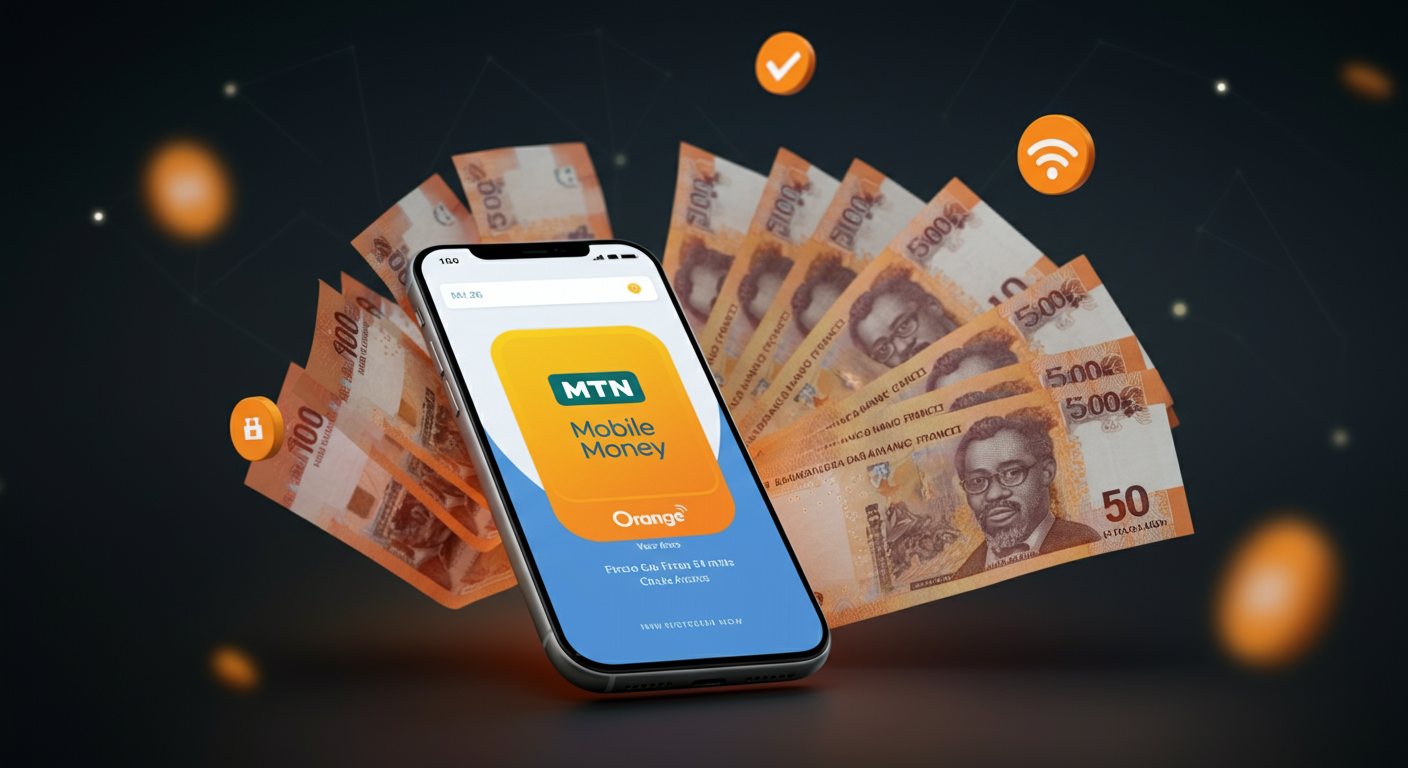
Mobile Money is the dominant digital payment method in Cameroon, with more than 8 million active users. MTN Mobile Money and Orange Money cover the entire territory, including rural areas. For e-commerce merchants, solutions like CinetPay, MonetBil, or PayDunya allow you to integrate these payments directly on your website or send payment links via WhatsApp. Transaction fees range from 1% to 2.5% depending on volumes.

Wave: the rising solution

Wave has conquered West Africa with its near-zero fees and ultra-simple interface. Since its expansion into Cameroon, the solution has been winning over more and more merchants and customers. Wave offers instant payment links, ideal for sales via WhatsApp or social media. Its growing adoption among young urban users makes it a channel not to be overlooked.

Bank cards and international payments

To reach an international clientele or Cameroonians in the diaspora, integrating bank card payments is essential. Stripe (via intermediaries), PayPal, and Flutterwave allow you to accept Visa and Mastercard payments. Flutterwave is particularly recommended for African merchants: it natively supports Mobile Money and bank cards in a single integration.

Cash on delivery: still indispensable

Despite the rise of digital payments, cash on delivery remains highly requested in Cameroon. Distrust of online shopping persists among part of the population. Offering this option significantly increases your conversion rate, but entails a higher risk of merchandise returns. Limit it to areas where you can deliver yourself or through a trusted partner.

3. How to Attract Customers Online in Cameroon

Having an online store is not enough: you need to generate qualified traffic. Here are the three most effective acquisition levers for the Cameroonian market.

Search engine optimisation (SEO): investing for the long term

SEO involves optimising your site to appear at the top of Google results for queries like "buy shoes Douala" or "grocery delivery Yaoundé". It is a long-term investment: results take 3 to 6 months to materialise, but the traffic generated is free and sustainable. Focus on local keywords, create quality content in French (and in English for Anglophone regions), and make sure your site loads quickly on mobile.

Paid advertising: Facebook Ads and Google Ads

Facebook Ads is the most widely used advertising channel by Cameroonian e-commerce merchants. With a starting budget of 5,000 to 10,000 FCFA per day, you can precisely target your audience by city, age, interests, and purchasing behaviour. Google Ads is more effective for capturing already-formed purchase intent (people actively searching for your product). Combine both to maximise your visibility at every stage of the customer journey.

Social media: building an engaged community

Beyond paid advertising, a strong organic presence on social media is a major asset. Post regularly on Facebook, Instagram, and TikTok. Short videos (Reels, TikTok) generate exceptional organic reach in Cameroon. Collaborate with local micro-influencers (5,000 to 50,000 followers): their audience is often more engaged and their rates more accessible than major celebrities. A well-targeted partnership can generate dozens of orders within 24 hours.

4. Managing Deliveries in Cameroon

Logistics is often the Achilles' heel of Cameroonian e-commerce merchants. A customer satisfied with their purchase but disappointed by the delivery will not return. Here is how to structure your supply chain.

Delivery players in Cameroon

Several delivery companies operate in Cameroon with varying levels of service:

  • Yango Delivery and Glovo: express delivery in under 2 hours in major cities (Douala, Yaoundé)
  • DHL and Chronopost: for national and international shipments with tracking
  • Campost: national network with extensive coverage, ideal for secondary cities
  • Independent couriers (via motorbike taxi): an economical solution for urban deliveries

Recommended logistics strategy

To get started, adopt a hybrid approach: express delivery via Yango or Glovo for Douala and Yaoundé, Campost for other cities, and a pick-up point (click & collect) in your neighbourhood to reduce costs. Communicate clearly about delivery times and send a WhatsApp confirmation message with the tracking number as soon as the order is dispatched. Transparency about delivery is a key trust factor.

Selling online in Cameroon requires compliance with a legal and tax framework. Here are the key points to know in order to operate in full compliance.

Registering your business

All commercial activity in Cameroon must be registered with the Trade and Personal Property Credit Register (RCCM). Setting up a sole proprietorship or a limited liability company (SARL) can be done through the Business Creation Formalities Centre (CFCE) within 72 hours. The cost ranges from 30,000 to 100,000 FCFA depending on the legal form. A taxpayer identification number (NIU) will be assigned to you by the Directorate General of Taxes.

Tax obligations

Cameroonian e-commerce merchants are subject to personal income tax (IRPP) or corporate tax (IS) depending on their status. VAT (19.25%) applies once your turnover exceeds the flat-rate tax threshold. The 2023 Finance Act introduced specific provisions for the digital economy: foreign platforms operating in Cameroon are now required to collect and remit VAT. Consult an accountant to optimise your tax structure from the outset.

Data protection and consumer rights

Law No. 2010/021 of 21 December 2010 governs e-commerce in Cameroon. It requires, among other things, clear display of prices, accessible general terms and conditions of sale, and a transparent returns policy. Law No. 2010/012 on cybersecurity governs the collection and processing of personal data. Display your T&Cs, privacy policy, and legal contact details on your site.

6. Success Stories: Cameroonian E-Commerce Entrepreneurs Who Are Thriving

Success in Cameroonian e-commerce is achievable. These inspiring examples show that local entrepreneurs have been able to seize the opportunities of the digital market.

Ndolo Shop: Cameroonian fashion at the click of a button

Launched in 2021 by a young entrepreneur from Douala, Ndolo Shop has become one of the most followed African fashion boutiques on Instagram in Cameroon. By focusing on quality wax fabric outfits, carefully crafted photos, and a WhatsApp community of more than 3,000 loyal customers, the founder reached a monthly turnover of 5 million FCFA in less than two years, without ever opening a physical store.

FreshMarket237: the online grocery store that delivers to your door

FreshMarket237 has revolutionised the delivery of fresh produce in Yaoundé. By combining a WooCommerce store, Mobile Money payments, and a network of motorbike couriers, the team delivers baskets of vegetables, fruit, and local products in under 3 hours. Their content strategy on Facebook (recipes, nutritional advice) allowed them to build a community of 45,000 followers organically, without any significant advertising budget.

TechCam Store: refurbished electronics online

TechCam Store has specialised in selling refurbished smartphones and computers via a Shopify store and WhatsApp Business. By offering clear warranties, product test videos on YouTube, and responsive after-sales service, they have built a solid reputation. Their Google ranking for queries like "buy refurbished iPhone Douala" now generates more than 200 organic visits per day.

7. Classic Mistakes Made by Beginner E-Commerce Merchants in Cameroon

Learning from others' mistakes will save you time and money. Here are the most common pitfalls to avoid at all costs.

  1. Launching without testing the market: many people invest in a complete website before validating that their product actually sells. Start by selling on WhatsApp or Facebook to test demand before investing in a store.
  2. Neglecting photo quality: in Cameroon as everywhere, a bad photo kills a sale. Invest in a white background, good natural lighting, or a ring light. Quality photos increase the conversion rate by 30 to 50%.
  3. Offering only one payment method: every customer has their preferences. Offering only MTN Mobile Money excludes Orange customers and vice versa. Integrate at minimum MTN MoMo, Orange Money, and cash on delivery.
  4. Ignoring after-sales service: a dissatisfied customer who does not receive a response within 24 hours will share their negative experience. Respond quickly, offer solutions, and turn complaints into loyalty opportunities.
  5. Underestimating logistics costs: many beginners forget to factor delivery costs into their margin calculations. Define your delivery policy clearly (free above a certain amount, fixed fee, etc.) and incorporate these costs into your prices.
  6. Copying competitors without differentiating: the Cameroonian market is increasingly competitive. Find your unique positioning: product niche, premium service, ultra-fast delivery, or sector expertise.

Conclusion: your roadmap for selling online in Cameroon

Selling online in Cameroon in 2026 is a real and accessible opportunity. The market is growing rapidly, payment solutions have become democratised, and Cameroonian consumers are increasingly comfortable with online shopping. The key to success rests on three pillars: choosing the right sales model suited to your product and target audience, offering a smooth payment and delivery experience, and building a consistent digital presence to attract and retain your customers.

Start small, test quickly, learn from your mistakes, and scale what works. Cameroonian e-commerce needs ambitious and well-prepared entrepreneurs. This guide is your starting point — now it's your turn.

Editorial desk & expertise

BEONWEB Editorial Team

Our team combines SEO strategists, web developers, designers and digital marketers — all working daily on real client projects across Cameroon and Francophone Africa.

SCIDIE Award 2026 — Best web agency in Cameroon8+ years of field experience150+ projects delivered

Your project

Ready to transform your digital presence?

BEONWEB guides you from strategy to launch — website, SEO, webmarketing.