
BEONWEB Insights
Blogdigital

SEO Audit: 20 priority fixes to win more qualified traffic and leads

A useful SEO audit goes beyond rankings. Here are the 20 fixes to prioritize to improve indexation, strengthen content, attract qualified traffic, and turn more visitors into leads.

BEONWEB Editorial Team5 March 202612 min
SEO Audit: 20 priority fixes to win more qualified traffic and leads

A useful SEO audit goes far beyond a rankings spreadsheet. Its real purpose is to reveal what blocks indexation, what weakens qualified traffic, and what prevents visitors from becoming leads. If your website attracts clicks but not enough calls, forms, or quote requests, the 20 fixes below are the ones to prioritize first.

Why an SEO audit should target qualified traffic, not just visibility

Higher rankings are helpful, but they are not the final goal. What really matters is attracting the right searches, landing users on the right pages, and giving them a clear enough journey to take action.

For a growing business in Cameroon or across Africa, an SEO audit should connect three layers: technical health, editorial relevance, and conversion performance. A page can be indexed correctly and still underperform if the message is vague, the page is slow, or the call to action feels weak.

How to prioritize fixes after an SEO audit

The strongest approach is to fix what unlocks indexation and user experience first, then what improves content quality, and finally what increases conversions. In short: make your pages visible, then compelling, then profitable.

1. Technical fixes and indexation

These first actions create the foundation. Without them, even strong content can remain underexposed.

1. Confirm that strategic pages are truly indexed

Use Google Search Console to verify that service pages, local landing pages, and pillar articles are actually indexed. A page missing from the index cannot drive traffic or generate leads.

2. Fix 404s, 410s, and redirect chains

Every broken link or unnecessary redirect wastes crawl budget, hurts user experience, and weakens internal authority flow. Prioritize pages that already receive traffic, links, or commercial interest.

3. Rewrite high-potential title tags and meta descriptions

Start with pages targeting clear commercial intent. A vague or duplicated title limits visibility, and a weak meta description lowers click-through rate even when the page already ranks well.

4. Speed up slow pages and improve Core Web Vitals

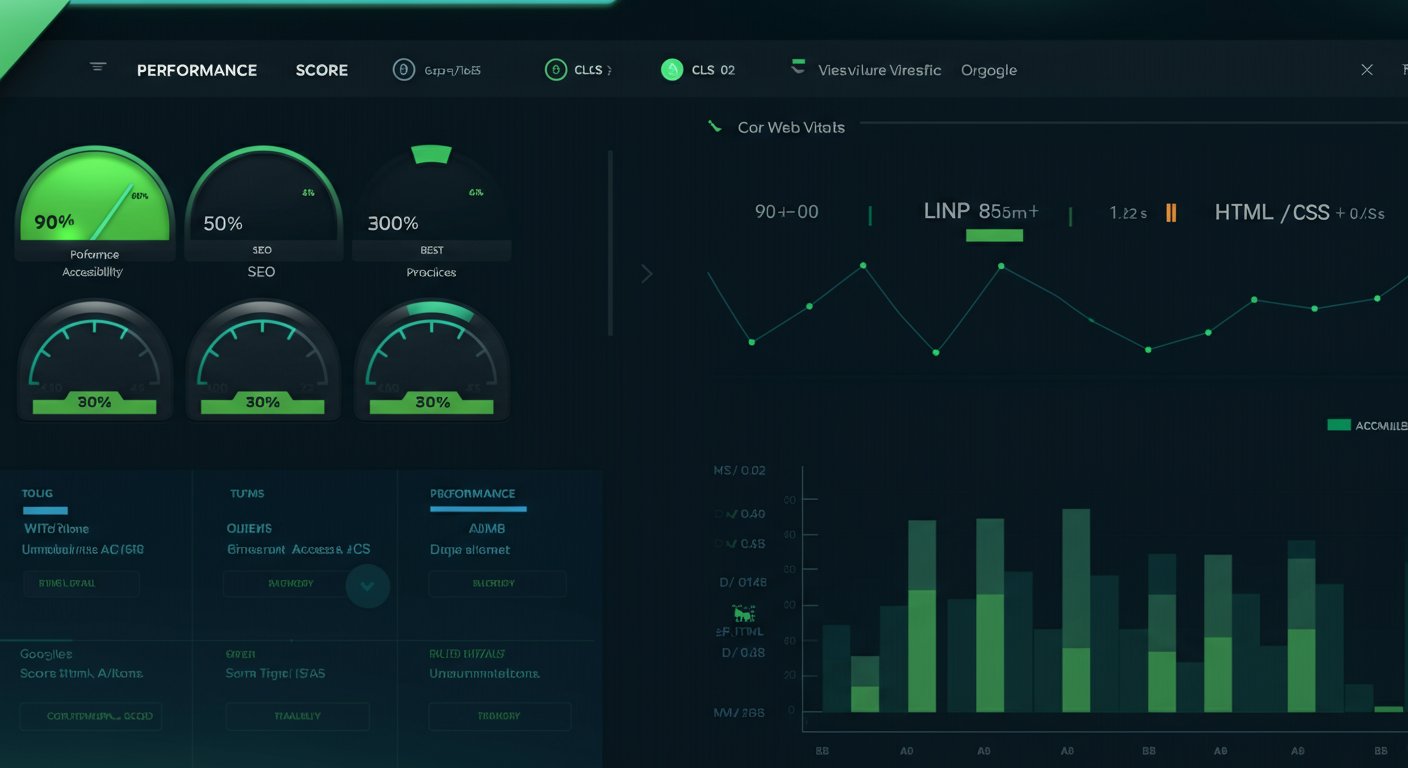
On mobile, a few extra seconds are enough to lose a prospect. Focus on LCP, CLS, and render-blocking resources, especially on service pages, contact pages, and local landing pages.

5. Optimize images, scripts, and critical resources

Compress heavy media, defer non-essential scripts, and remove unnecessary dependencies. A lighter website improves rankings, engagement, and conversion rate at the same time.

2. Content and search intent fixes

Once the technical base is healthy, the next challenge is editorial: matching each page to a real query and a clear visitor expectation.

6. Remove keyword cannibalization

If two pages target the same intent, Google may hesitate between them and neither will perform at full strength. Merge, reposition, or clearly differentiate overlapping pages.

7. Give every page a single clear intent

A service page should answer commercial intent, a blog article should answer informational intent, and a local page should answer geographic intent. The clearer the promise, the more qualified the traffic becomes.

8. Rework H1, H2, H3 structure and opening copy

A confusing heading structure hurts readability and makes the topic harder for Google to interpret. Refine headings so visitors quickly understand the problem, the solution, and the business value.

9. Refresh outdated content with recent evidence

Articles about trends, costs, local SEO, or digital advertising age quickly. Updating examples, numbers, and clearer recommendations sends stronger freshness signals and improves trust.

10. Add decision-oriented FAQs

A strong FAQ should not repeat the article. It should answer objections that block action: budget, timing, expected results, differences between options, and level of support. Those answers often trigger the lead.

3. Architecture, internal linking, and authority

SEO performance does not depend on pages in isolation. It also depends on how your website distributes authority and guides users toward conversion pages.

11. Create a dedicated page for every important offer

If several services are buried on one generic page, you lose both SEO precision and commercial clarity. Each major offer deserves its own optimized page with a specific message, proof, and CTA.

12. Strengthen internal linking between blog, services, and case studies

Articles should support service pages, and service pages should be reinforced by case studies. This blog-service-proof triangle helps Google understand your expertise and helps users move toward contact.

13. Use descriptive internal anchor text

Replace generic links with anchors that describe the value of the destination page. Clear anchors improve context, relevance, and topical understanding across the site.

14. Add useful structured data

FAQ, Article, Breadcrumb, and LocalBusiness schema will not replace strong content, but they help search engines understand context and may improve visibility in rich results.

15. Reinforce local pages and trust signals

If you target Douala, Yaounde, or other local markets, your pages must show relevant proof: service area, nearby client examples, local understanding, and contact methods that feel simple and trustworthy.

4. Conversion and measurement

SEO traffic only matters when it creates business action. This is the part many audits overlook, even though it defines the real return on investment.

16. Define one primary conversion goal per page

Every strategic page should push one main action: request an audit, ask for a quote, book a call, send a WhatsApp message, or download a resource. Too many choices dilute attention and reduce conversion rates.

17. Simplify forms and contact journeys

A form that is too long or too cold lowers response rates. Keep only essential fields, reassure visitors about response time, and optimize the experience for mobile users.

18. Add social proof where decisions happen

Testimonials, client logos, case studies, and result metrics should appear near high-friction moments: before the form, after the main argument, or inside local sections. Proof should support the promise, not just decorate the page.

19. Track real conversions, not just traffic

Measure submitted forms, phone calls, WhatsApp clicks, quote requests, and the pages that influence them. A page can look strong in traffic while contributing little commercially; the opposite can also be true.

20. Put a monthly follow-up plan in place

An SEO audit is not a one-time intervention. Each month, prioritize a few fixes, review rankings and Search Console signals, and track the pages that generate the best commercial outcomes.

A practical 30-day action plan

Week 1: fix indexation, critical errors, and slow pages. Week 2: improve titles, metas, and pages with strong commercial intent. Week 3: strengthen internal linking, service pages, and local pages. Week 4: optimize CTAs, forms, social proof, and conversion tracking.

FAQ: common questions about SEO audits

Should all 20 fixes be handled at once?

No. Start with what blocks visibility and user experience, then move to editorial relevance, then to conversion improvements. Prioritization matters more than volume.

How long before results become visible?

For technical fixes and improvements on existing pages, first signals can appear within a few weeks. For more competitive queries, consistent work over several months is often required.

Why can an SEO audit increase lead generation?

Because it finally connects SEO to business outcomes. A strong audit does not just aim to rank pages higher; it aims to attract better searches, reassure visitors faster, and move them toward action.

Conclusion: turn your SEO audit into a growth lever

If your site generates visibility but not enough inbound demand, the issue is often not traffic alone but the quality of the fixes being prioritized. BEONWEB helps transform an SEO audit into a concrete action plan aligned with your market, offers, and revenue goals.

Editorial desk & expertise

BEONWEB Editorial Team

Our team combines SEO strategists, web developers, designers and digital marketers — all working daily on real client projects across Cameroon and Francophone Africa.

SCIDIE Award 2026 — Best web agency in Cameroon8+ years of field experience150+ projects delivered

Your project

Ready to transform your digital presence?

BEONWEB guides you from strategy to launch — website, SEO, webmarketing.